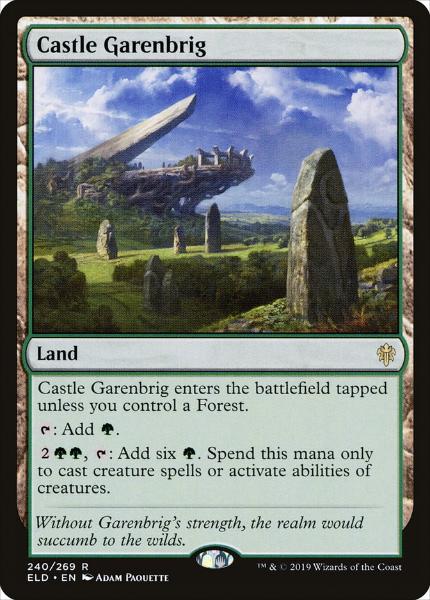
Keep in mind, when using this card, that paying out 4 converted mana plus the tap to get only 6 green mana puts you exactly plus 1 mana, because you lost this land's 1 green when you tapped it ;) Not such a great ability, if you ask me. Perhaps... MAYBE they overlooked that reality in the design process. There are a lot of examples in the game where I can prove that the card is underpowered, and not relevant to the current scheme of things. You might think that I would only talk about how much overpowering there is to be found in it right now, but in truth, I'm just as pissed about underpowering. Look at the whole common set of cards in any given set. How many of those cards can you really use competitively? Almost none. And, as you know, 11 of your 15-card pack will therefore be good for not much more than hording. I know, I know, the commons are useful in draft! Well, not really. If the commons were more powerful (in the right way, of course), it would make for a more balanced dynamic in draft. I look at most of them as bad cards that don't do anyone any real good. Try drafting, and you'll inevitably find many situations where you can't do anything with your cards, as fundamentally sound as your strategy might be. Bad tricks are most effective in draft, therefore, but that ruins the real game hiding inside the poser, MTG. Magic IS, without a doubt, a real game, but current play is basically as fake as it can be. It's a matter of values - Where was value placed in the creation of these cards? It might be to promote the trickery of bandwagon mobs, it might be to cast a glamour on people for the purpose of making money, or it may have been to fit the theme of the set well, pleasing the fantasizers. There isn't much evidence in any of these cards that the real game was deeply considered. In my humble opinion, something like this doesn't even belong in the hands of large teams of money-worshippers. It would work best coming from one mind, who could carefully evaluate the effects of his decisions, and weigh out the proper balance of things through his cumulative knowledge of his own work. |